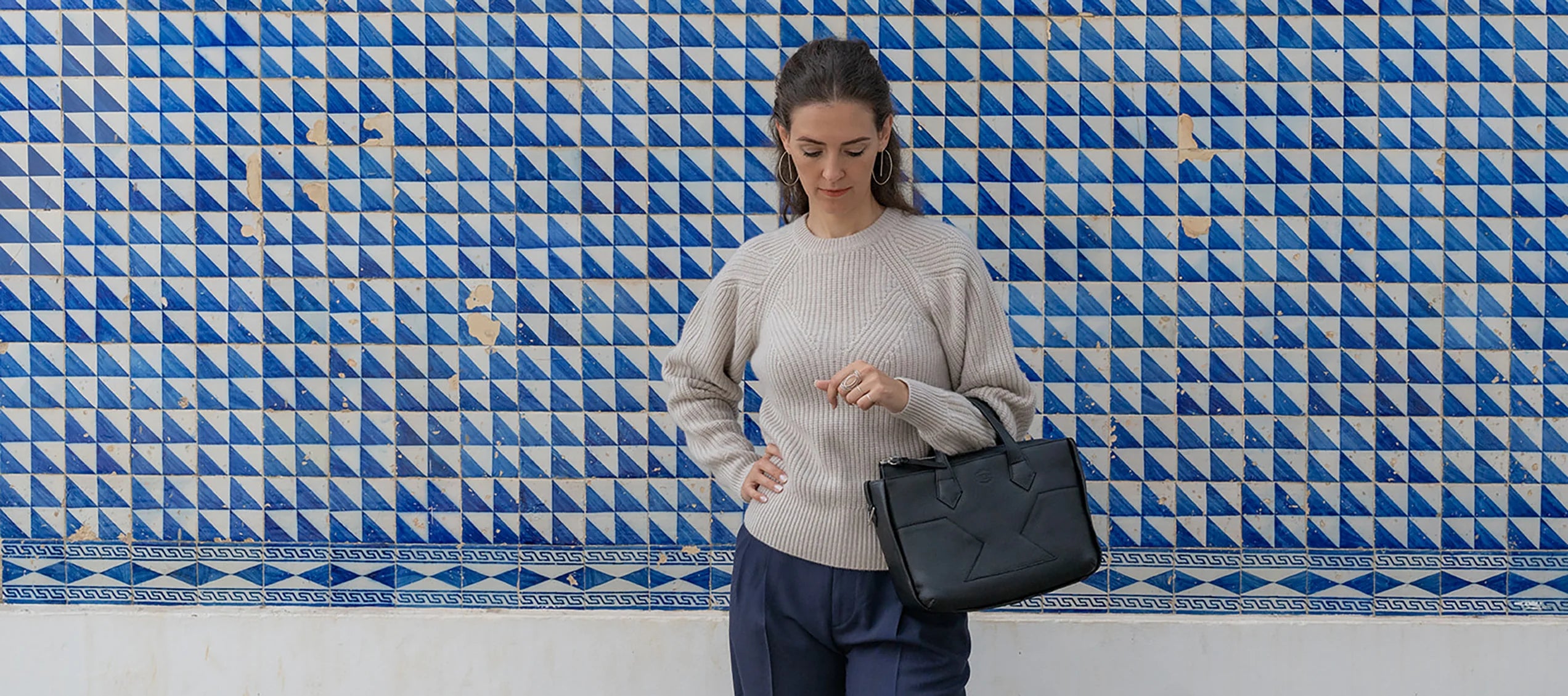



I find some of my best pieces in vintage stores. Most people say they can't find anything nice. This post is to help you change that. Because vintage shopping really is fun and everyone can benefit from it.
Before you go: lay the groundwork
Tip 1: Go often.
Stock changes really quickly in the good stores. Once a week is not too much if you have a good vintage shop nearby. The good pieces that are there today will be gone by Saturday. Don't wait for the weekend.
Tip 2: Go early on weekdays.
You'll have less competition. The racks are less picked over. Vintage stores typically get deliveries in the morning on weekdays. I find that Tuesday mornings are perfect. Most stores are closed on Monday, so Tuesday morning is the start of the week: you get all the fresh arrivals.
Tip 3: Build relationships with the shop owners.
This one takes time, but it pays off. Regular customers get called when something good comes in. They get pieces held for them. So be friendly, be consistent, show genuine interest in the shop.
Shop owners curate what hangs on the rack. It's human curation. If they know your taste, they'll think of you when the right piece arrives. That's a real thing. I've benefited from it personally. In bigger chain stores, the salespeople are employees and they don't decide what gets sold. But in independent vintage shops, the owner is the curator. And that matters.
How to scan the racks and find the gems
Tip 4: Scan by fabric, not colour.
Most people move through a rack by looking at colours and prints. But the racks are packed, everything is tight, and you don't really see the designs.
Train yourself to move your hand along as you look. Natural fibres (cotton, wool, silk, linen) have weight and texture that cheap synthetic fibres don't. Once your hands know the difference, they'll tell you which pieces to pay attention to.
Tip 5: Look in unexpected sections.
Sometimes the great finds are not where you're looking. Think of the menswear section for belts, scarves, and oversized blazers. Look in homewares for fabric pieces or interesting textures. Look at the accessories section — sometimes great pieces are all together in one box, not well displayed, but worth a search.
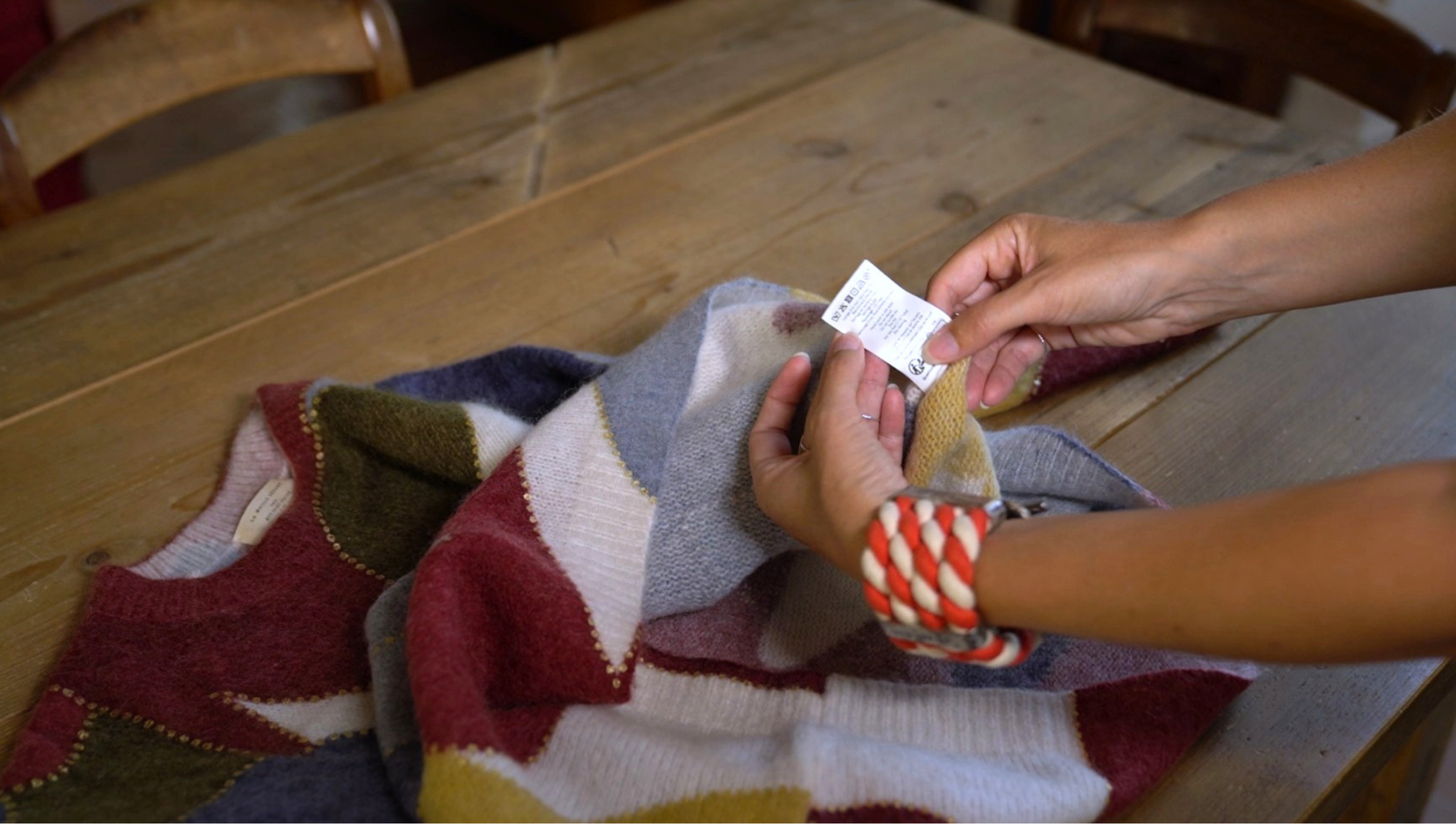
Tip 6: Read the label.
Older pieces (real vintage pieces e.g. made in Italy or France) are often a strong quality signal, and it will be written on the neck label. Dead stock tags mean that the pieces were never worn, still have the original label, and are brand new. Yes, you'll find things like that too in thrift stores.
If the label has been removed entirely, that's not necessarily a red flag. But do look more closely at the construction and the materials.
Tip 7: Inspect the stitching.
A good piece has tight, even, consistent stitches. Flip the garment inside out. You want a clean inside finish with seams neatly folded. That's a sign of a well-made garment.
If you see loose threads, uneven stitching, or seams that pucker when you pull lightly, those are the first things to unravel after a few washes. We underestimate the importance of good stitching, but it realyl matters for durability.
Checking the condition of secondhand pieces
Tip 8: Check for lining.
For tailored pieces, a fully lined garment almost always means higher craftsmanship. Lining takes extra fabric, extra time, extra care. Budget productions typically skip it.
So if you're holding a blazer or a fitted skirt and it has a full lining in good condition, that's great. But here's the detail: make sure the lining is bigger than the upper fabric. That allows you to get into the skirt without the lining always riding up. In other words, if the lining isn't bigger, you can't move comfortably in a garment.
Tip 9: Look at the hardware.
Metal zippers age better than plastic. They're also a classic vintage quality marker.
For shoulder pads: they should be sewn in, not glued. Glued pads detach over time and move, especially if they're in between two layers of fabric. Sewn-in pads indicate proper tailoring.
Tip 10: Check for stains in hidden places.
Underarms. Neckline. Inside the lining at the back...
Hold the garment up to the light and check that there isn't any discolouration. If the piece is clean but there's a stain, it logically means it will stay there even when you wash it.
It can be deodorant stains, food stains, makeup stains. Foundation stains are particularly tricky to remove.
Tip 11: Check for moth holes.
Run your fingers slowly over any knit or wool piece. Or look at it against daylight. One small hole usually means there are more nearby. Moths eat in clusters.
Check the fold lines especially under the collar, at the elbows. Those are the areas most often missed when new pieces come into a store. If a garment has one moth hole, it's an immediate no for me, because there might be moths around and I don't want to import them into my house...
Tip 12: Check the fastenings.
Test every zip, every button, every hook. Is the zip smooth? Is it rusted at the teeth? Do the buttons feel secure, or do they wobble? Replacing a broken zip or resetting buttons can cost more than you'd expect. I'm not saying it's impossible, but do factor that cost in before you buy.
Fit and decision-making
Tip 13: Vintage sizing is not modern sizing!
This is the most common mistake people make. A size 38 from the 1970s is not the same as a size 38 today. Sizing standards have changed completely, multiple times, and are not consistent from one country to the next.
And yet stores like to sort garments by size. So it's worth looking not only on the rack of your official size, but check adjacent racks as well. Size up, size down. And always try garments on in store. Never trust the tag number, especially when thrifting across several decades.
Tip 14: Never buy "maybe" pieces.
If it doesn't fit now, don't buy it thinking it will "maybe" fit later.
Sometimes you find a great piece that is almost the right size, and it's the only one they have, and you love it. But no.
The "maybe" part of your wardrobe is where your money goes to die (sounds harsh, but true). If it fits, if it works, if you love it today, yes. If not, leave it for someone else. That's the game when shopping vintage!
Bonus: Is a garment worth getting tailored?
Before you buy a secondhand piece that needs work, run it through four questions:
Fabric quality
Is it natural or high quality? Because I'm not going to invest in having a cheap piece tailored. The fabric has to be worth it first.
Structure
Well-constructed jackets, trousers, coats: worth adjusting.
Flimsy blouses or poorly made skirts: probably not.
A skirt that has big side seams can be made half a size bigger by using some of the seam allowance. But if it's too tight around the bum and the whole back is one pattern piece with no darts, you have nothing to work with.
Simplicity
Basic alterations only. Shortening a hem is easy. Taking the waist in or out: okay.
But changing the shape or placement of the armhole, full resizing, recutting the neckline... even seamstresses don't like doing it. It's a hassle.
Timelessness
You're loving a piece right now, but would you still love this piece in three years? That's the most important question.
If your garment passes all four questions, go ahead. Buy it and have it altered.
Otherwise, it's not the right piece for you.
The takeaway
Vintage shopping isn't a gamble if you know what you're looking for. It's one of the most intentional ways to build a wardrobe that actually lasts!
And it's sustainable. You're extending the life of a garment that might otherwise end up in landfill. You're buying something that has already stood the test of time.
I've summarised all these checks in my free Quality Checklist. Download it at www.justineleconte.com/quality.
Get in the habit of checking these things when you shop, whether you're in a vintage store or a regular boutique.
And if you want the full breakdown, watch the video HERE.
To go deeper:
Learn more about how to recognise quality in my post on how to recognize good quality clothing. These principles apply whether you're shopping vintage or new.
Next step: build your wardrobe intentionally, around your core pieces. Get my Fillable Wardrobe Checklist to map what you have and what you're missing for your perfect wardrobe.